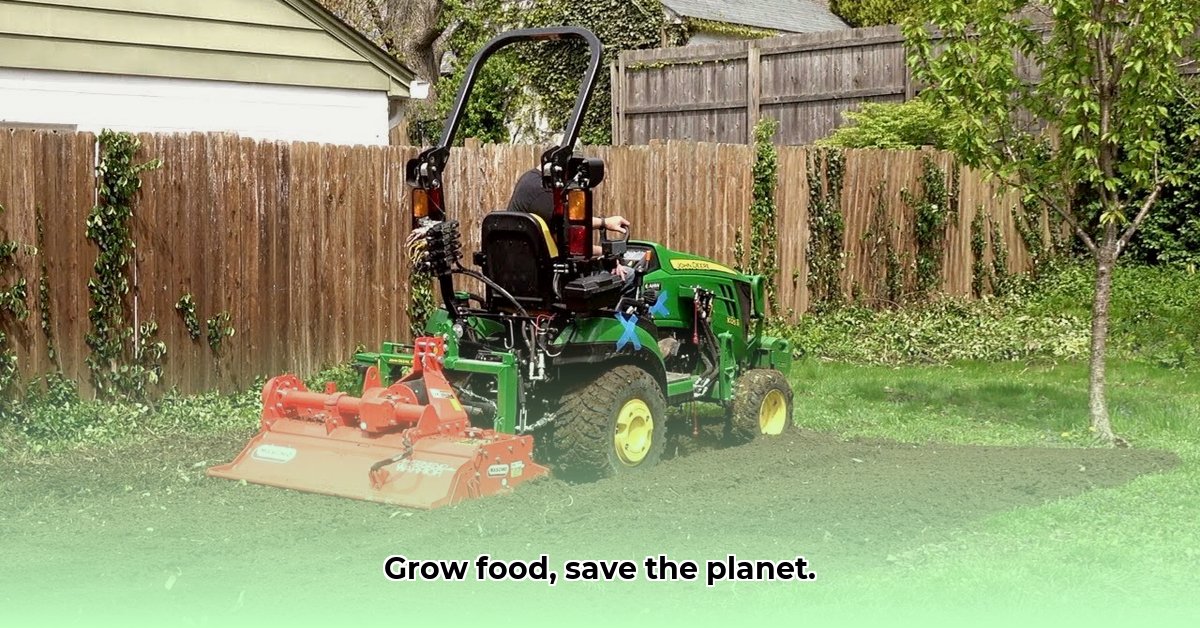
Want to cultivate a thriving garden without harming the environment? Selecting the right garden tractor is crucial. This guide helps you choose a tractor that aligns with your land, farming style, and commitment to sustainability. We'll explore everything from determining the optimal tractor size and power to selecting attachments that enhance soil health and save you money. Let's build a greener, more productive garden together! Learn more about creating neat rows: Making garden rows.
Assessing Your Needs: Finding the Right Tractor for Your Garden
Before browsing tractor brochures, thoroughly evaluate your property. This crucial first step helps ensure you select a tractor appropriately sized for your needs, mirroring the principle of choosing the right car for your driving conditions.
Step 1: Measure Your Space. How many acres will you cultivate? (Consider using online acreage calculators for irregular plots.) A small garden requires a different tractor than several acres of farmland.
Step 2: Analyze Your Terrain. Is your land flat or hilly? (Note: Sloped terrain requires more powerful tractors with four-wheel drive capabilities). A small, nimble tractor is ideal for flat land, while a more powerful machine handles uneven terrain.
Step 3: Plan Your Crops. What will you grow? (Consider the intensity and frequency of tillage required). Heavy crops like potatoes need more powerful tilling than delicate lettuce.
Step 4: Set a Realistic Budget. Tractors vary greatly in price. (Remember to factor in maintenance, fuel, and attachment costs). Determine a comfortable budget to avoid overspending.
Consider these questions:
- How much time can I dedicate to tractor maintenance?
- What attachments are necessary for my specific tasks? (e.g., plowing, tilling, mowing)
- Are there tasks I may need external assistance for?
Tractor Types and Features: Picking the Perfect Machine
Choosing a tractor is like choosing footwear – the right fit is essential. Different tractor types cater to various needs.
Compact Tractors: Ideal for smaller gardens, offering maneuverability and lower horsepower, suitable for less intensive work. (Suitable for plots under 5 acres)
Zero-Turn Tractors: Excellent for mowing large lawns and precise maneuvering, but primarily used for landscaping, not intensive farming. (Not ideal for heavy tillage)
Rear-Engine Tractors: Simpler and more affordable, suitable for basic tasks on small plots. (Best for less demanding tasks on smaller properties)
Key Features to Consider:
Horsepower (HP): The power output of the tractor's engine. Higher HP means more power, but generally higher fuel consumption. (Choose based on your land size and workload.)
Fuel Efficiency: Diesel tractors often offer better fuel economy than gasoline models. (Consider long-term fuel costs and the environmental impact of your choice.)
Transmission: Hydrostatic transmissions are smooth and easy to operate, while manual transmissions are more durable but require more skill. (HST is generally preferred for ease of use.)
PTO (Power Take-Off): A shaft powering attachments like tillers or mowers. (Ensure compatibility with needed attachments.)
The best tractor is the one best suited to your specific needs. Prioritize your requirements and choose accordingly! Don’t overestimate your capacity; a smaller, efficient tractor will be far more sustainable than an oversized machine.
Choosing Sustainable Attachments: Working Smart, Not Hard
Attachments significantly impact sustainability. Sustainable tractor gardening minimizes soil disturbance and maximizes yields.
No-Till Implements: These leave soil undisturbed, reducing erosion, improving soil structure, and boosting water retention. (Environmentally beneficial, requiring less fuel and resulting in healthier soil). However, weed management may require additional strategies.
Precision Seeders: These plant seeds with accuracy, saving seeds and fertilizer while minimizing environmental impact. (More efficient use of resources). They can be more expensive upfront.
Mulch Spreaders: Mulching retains moisture, suppresses weeds, and enriches soil. (Reduces watering and herbicide needs). This promotes a healthier soil ecosystem.
Maintenance and Sustainability: Extending Tractor Lifespan
Regular maintenance prolongs tractor life and minimizes waste.
Regular Oil Changes: Essential for engine longevity and performance. (Follow the manufacturer's recommendations for oil type and change intervals.)
Filter Replacements: Clean or replace air, fuel, and oil filters as scheduled. (Dirty filters reduce efficiency and damage the engine).
Tire Pressure Check: Proper tire pressure improves fuel efficiency and traction. (Maintaining optimal tire pressure reduces fuel consumption and soil compaction).
Beyond the Basics:
Responsible Disposal: Recycle or responsibly dispose of parts at the end of the tractor's lifespan. (Check local regulations for proper disposal methods.)
Alternative Fuels: Explore biodiesel or other renewable fuels to lessen your carbon footprint. (Biodiesel is a viable alternative, but production processes vary in their environmental impacts.)
Financial and Regulatory Considerations: The Long-Term Perspective
Thorough planning is key. Tractor gardening involves more than just the initial purchase price.
Cost-Benefit Analysis:
Factored costs include:
- Initial Purchase Price: The upfront cost of your tractor.
- Annual Maintenance: Costs for regular maintenance and repairs.
- Fuel Costs: Fuel expenses depending on tractor size and fuel type.
- Attachments: Cost of any additional attachments.
Regulatory Compliance:
Stay informed about local regulations concerning emissions and equipment disposal. These regulations are dynamic and may change over time.
By carefully assessing your needs, selecting appropriate equipment, and prioritizing responsible maintenance, you can build a thriving and ecologically sound farm. Sustainability isn't just environmentally responsible; it's also economically advantageous in the long run.